Many active adults look for ways to support joint comfort and overall wellness as part of a daily routine. Fish oil is one of the most well-studied naturally-derived supplement options — particularly for its omega-3 fatty acid content. Here's a look at what fish oil is, what it contains, and how it may support joint comfort.
Table of Contents
- What Is Fish Oil?
- Omega-3 Fatty Acids — EPA and DHA
- Fish Oil and Joint Comfort
- Choosing a Quality Fish Oil
- Eien Health Super Omega-3
- FAQs
What Is Fish Oil?
Fish oil is a dietary supplement made from the tissues of oily fish — most commonly salmon, sardines, mackerel, herring, and anchovies. It is rich in omega-3 fatty acids and is one of the most widely-used naturally-derived supplements in the world.
Omega-3 Fatty Acids — EPA and DHA
The two most-studied omega-3 fatty acids in fish oil are:
- EPA (eicosapentaenoic acid) — supports a healthy inflammatory response and normal cardiovascular function as part of a balanced diet.*
- DHA (docosahexaenoic acid) — a major structural component of the brain and retina; supports normal brain and eye function.*
The human body cannot make EPA and DHA on its own in meaningful amounts — these are considered essential fats that come from diet or supplementation. The American Heart Association suggests including omega-3-rich foods as part of a balanced diet for general wellness.
Fish Oil and Joint Comfort
EPA and DHA omega-3 fatty acids support a healthy inflammatory response — one of the body's natural processes. As part of a daily routine, fish oil supplementation may support joint comfort and normal joint function for active adults.* For a broader look at daily routines that support joint comfort, see our guide to natural approaches to joint comfort.
Choosing a Quality Fish Oil
When choosing a fish oil supplement, look for:
- Specific EPA and DHA amounts on the label — not just "total fish oil"
- Wild-caught sourcing — typically preferable to farm-raised
- Mercury screening — quality manufacturers screen for heavy metals
- No fishy aftertaste — high-quality softgels typically have a coating
- Transparent dosing — full supplement facts panel on every label
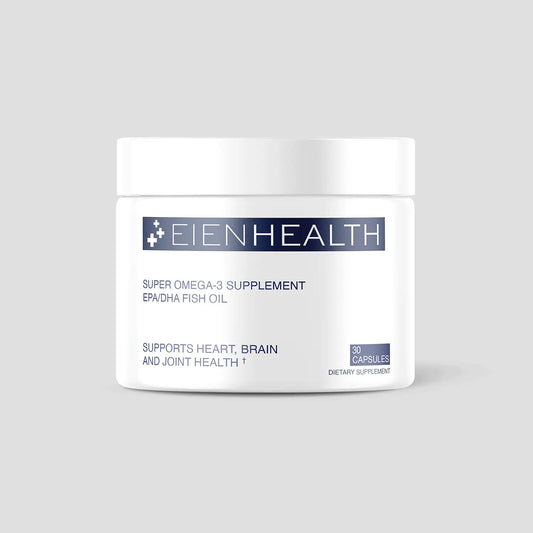
Eien Health Super Omega-3

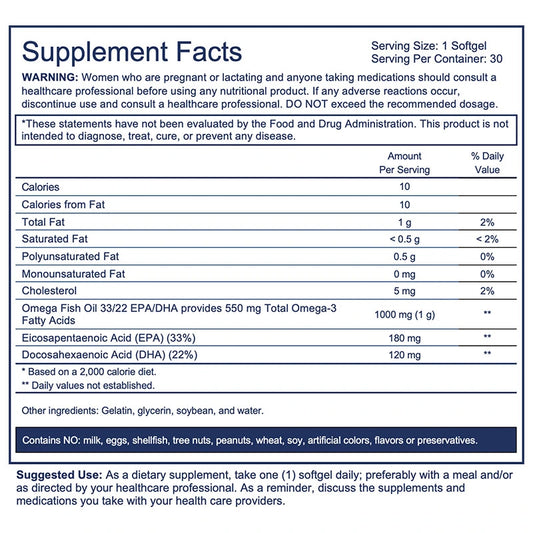
Eien Health's Super Omega-3 Supplement Fish Oil delivers 1000 mg of fish oil per softgel — 550 mg of total omega-3 fatty acids including 180 mg EPA and 120 mg DHA — sourced from wild-caught fish and screened for purity. One softgel daily, no fishy aftertaste, full supplement facts panel published on the label.
For more on how omega-3s pair with other joint-comfort approaches, see our piece on natural approaches to joint comfort.
FAQs
What is fish oil?
Fish oil is a dietary supplement made from the tissues of oily fish (salmon, sardines, mackerel, etc.). It's rich in omega-3 fatty acids, particularly EPA and DHA.
What are EPA and DHA?
EPA and DHA are the two most-studied omega-3 fatty acids found in fish oil. EPA supports a healthy inflammatory response and normal cardiovascular function; DHA is a structural component of the brain and eyes.*
How does fish oil support joint comfort?
EPA and DHA support a healthy inflammatory response as part of a balanced diet, which may support joint comfort over time as part of a daily routine.*
How much fish oil should I take daily?
The answer depends on your goals, diet, and individual health. Many quality supplements offer 500-1000 mg of total omega-3 fatty acids per softgel. Consult your healthcare provider for personalized guidance.
Is fish oil safe?
Fish oil is generally well-tolerated. People taking blood-thinning medications or who are pregnant or nursing should consult their healthcare provider.
What should I look for in a fish oil supplement?
Look for specific EPA and DHA amounts on the label, wild-caught sourcing, mercury screening, and a transparent supplement facts panel.
Are there foods that contain omega-3s naturally?
Yes — fatty fish like salmon, sardines, and mackerel are the most concentrated dietary sources. Walnuts, flaxseeds, and chia seeds contain ALA, a different omega-3.
Can I take fish oil with other supplements?
Often yes, but consult your healthcare provider — particularly if you take blood-thinning medications.
*These statements have not been evaluated by the Food and Drug Administration. This product is not intended to diagnose, treat, cure, or prevent any disease.
Individual results may vary. Consult your healthcare provider before starting any new supplement, especially if you are pregnant, nursing, taking medication, or have a medical condition.